Difference Between Sony WH-1000XM6 and AirPods Max Explained
In the high-stakes arena of premium noise-canceling headphones, two titans consistently command the conversation: Sony and Apple. For years, Sony’s "1000X" series has been the gold standard for travel-friendly performance, while the AirPods Max redefined what a luxury "lifestyle" headphone could look and feel like. With the release of the Sony WH-1000XM6, the rivalry has reached a fever pitch. This article provides an exhaustive analysis of how these two flagship devices compare, focusing on the technical nuances, ergonomic realities, and acoustic signatures that define the user experience.
Choosing between the Sony WH-1000XM6 and the AirPods Max is rarely about finding a "winner" in the absolute sense. Instead, it is about identifying which set of compromises aligns with your existing technology ecosystem and your personal priorities. Whether you are a frequent flyer seeking the ultimate cone of silence or a creative professional looking for seamless integration with a Mac and iPhone, the differences between these two models are profound and consequential.
Detailed Product Analysis: Sony WH-1000XM6
The Sony WH-1000XM6 represents the sixth generation of a lineage that has focused relentlessly on two things: class-leading Active Noise Cancellation (ANC) and lightweight comfort. Following the design departure of the XM5, the XM6 continues the "noiseless" design philosophy, featuring a slim, integrated headband and a refined hinge mechanism. However, Sony has made significant strides in the internals, introducing a new proprietary processor specifically designed to handle ultra-high-frequency noise that previous models struggled to suppress.
What sets the WH-1000XM6 apart is its versatility. It remains one of the few high-end headphones that still provides a 3.5mm jack for wired listening and a fully collapsible—though still largely rigid—form factor that fits into a moderately sized travel case. Sony’s approach to sound is "consumer-plus," meaning it offers a warm, bass-heavy profile out of the box that can be meticulously tuned via the Sony Headphones Connect app. For the audiophile on the go, the inclusion of LDAC support allows for near-lossless wireless audio transmission on supported Android devices, a feature that remains a significant technical advantage over its competitors.
Detailed Product Analysis: AirPods Max
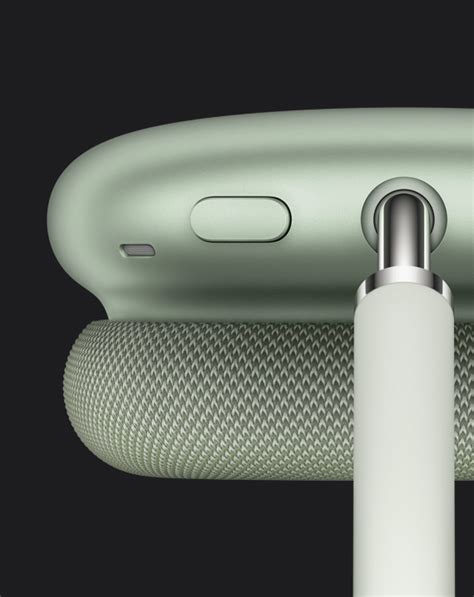
The AirPods Max, by contrast, feels less like a piece of consumer electronics and more like a piece of industrial design art. Eschewing the plastics used by Sony, Apple utilizes machined aluminum earcups and a stainless steel frame. The most distinctive feature is the knit-mesh canopy headband, designed to distribute weight across the head to mitigate the substantial 385 grams of mass. It is a heavy headphone, but one that feels exceptionally "premium" in the hand.
In terms of performance, the AirPods Max relies on the H2 (or H1, depending on the version) chips in each earcup to perform "computational audio." This means the headphones are constantly adjusting the equalization (Adaptive EQ) 200 times per second to account for the fit and seal against the user's head. The transparency mode on the AirPods Max remains the industry benchmark; while most headphones make the outside world sound "piped in" and electronic, Apple’s implementation is so natural it feels as though the headphones aren't even there. However, this excellence comes at the cost of platform exclusivity. To access firmware updates, spatial audio with head tracking, and "Find My" features, the user must stay firmly within the Apple ecosystem.
Technical Comparison and Real-World Usage
When comparing these two, the "on-paper" specs only tell half the story. The real-world difference manifests in how they handle common environments. In a noisy office environment, the Sony WH-1000XM6 typically wins on total silence. Its ANC is tuned to hit the human voice frequency better than almost any other product. If you need to shut out a talkative coworker, the Sony is your tool. The AirPods Max, while excellent at canceling the low-end drone of a jet engine, allows a bit more high-frequency "hiss" and transient noise to leak through, favoring a more "natural" pressure sensation over absolute isolation.
For commuters, the weight becomes a factor. Wearing the Sony WH-1000XM6 for a four-hour flight is effortless due to its lightweight construction and soft synthetic leather pads. The AirPods Max, because of its weight, can cause neck fatigue during long sessions, and its mesh ear cushions-while breathable—can feel slightly abrasive compared to Sony’s smooth surfaces. Furthermore, the AirPods Max "Smart Case" provides almost no protection for the headband and leaves the headphones vulnerable to spills or punctures in a backpack, whereas Sony’s hard-shell case is a fortress for the hardware.
Find top-rated Electronics products at great prices.
View Offers →Pros and Cons: Sony WH-1000XM6
- Pro: Industry-leading ANC that excels in silencing human speech and high-pitched office noises.
- Pro: Lightweight, ergonomic design that allows for all-day wear without pressure points or neck fatigue.
- Pro: High-resolution audio support via LDAC and a physical 3.5mm jack for versatile connectivity.
- Pro: Best-in-class battery life, often exceeding 30 hours with ANC enabled and offering ultra-fast charging.
- Con: The build quality is predominantly plastic, which can feel less durable or "cheap" compared to metal rivals.
- Con: Touch controls can be finicky in cold weather or when wearing gloves, leading to accidental skips.
Pros and Cons: AirPods Max
- Pro: Exceptional build quality with aluminum and steel components that feel built to last a lifetime.
- Pro: The most transparent and natural-sounding "Transparency Mode" currently available in any headphone.
- Pro: Seamless switching between Apple devices (iPhone, iPad, Mac) and integrated Spatial Audio for movies.
- Pro: Physical controls via the Digital Crown are tactile, precise, and much more reliable than touch gestures.
- Con: Highly restrictive ecosystem; many key features are unavailable or difficult to use on Windows or Android.
- Con: The headphones are significantly heavier than the Sony, which may be uncomfortable for some users.
- Con: The carrying case lacks protection and does not fully enclose the headphones, risking damage during travel.
The Feature Breakdown
A critical area of difference lies in software control. Sony offers a deep, sometimes overwhelming level of customization. Through their app, users can adjust the "Ambient Sound Control" on a 20-point scale, enable "Speak-to-Chat" (which pauses music when you start talking), and even optimize the ANC based on atmospheric pressure—a niche but valuable feature for frequent flyers. Users can also prioritize connection stability versus sound quality, making the XM6 a more adaptable tool for varied Bluetooth environments.
Apple takes the opposite approach. There is no dedicated AirPods app; instead, settings are baked into the iOS Bluetooth menu. There is no manual EQ; you get what Apple’s algorithms think is best. For some, this "it just works" philosophy is a relief. For others who want to dial back a specific treble peak or boost the sub-bass, the AirPods Max can feel frustratingly locked down. Additionally, the AirPods Max lacks a power button, relying on a low-power mode when placed in the case, whereas the Sony can be turned completely off, preserving battery for weeks of non-use.
Comparative Specifications
| Feature | Sony WH-1000XM6 | Apple AirPods Max |
|---|---|---|
| Weight | Approx. 250g | Approx. 385g |
| Driver Size | 30mm High-Precision Driver | 40mm Dynamic Driver |
| Battery Life | 30-40 Hours (ANC On) | Up to 20 Hours (ANC On) |
| Charging Port | USB-C | USB-C (latest) / Lightning (Legacy) |
| Hi-Res Support | LDAC, DSEE Extreme | AAC (No High-Bitrate Wireless) |
| Wired Input | 3.5mm Analog Jack | USB-C Audio (on newer models) |
| Build Material | Recycled Plastic, Synthetic Leather | Anodized Aluminum, Stainless Steel |
Sound Signature Comparison
Sound is subjective, but the acoustic engineering of these two devices follows very different philosophies. The Sony WH-1000XM6 features a "fun" sound signature. It has a notable "thump" in the mid-bass that makes genres like Hip-Hop, EDM, and Modern Pop feel energetic. Sony has worked to clear up the "mud" that plagued earlier generations, so while the bass is prominent, the vocals remain crisp. The XM6 also uses DSEE Extreme, an AI-driven upscaling technology that attempts to restore high-frequency detail lost in compressed music streams, which is a boon for Spotify users.
The AirPods Max targets a more balanced, "audiophile-lite" sound. The bass is present but incredibly controlled—it never bleeds into the midrange. Highs are sparkly and detailed without being sibilant. Because of the large earcups and the way the drivers are angled, the "Soundstage" (the perceived space around your head) feels wider on the AirPods Max than on the Sony. When watching a movie with Spatial Audio enabled, the AirPods Max creates a convincing 3D theater-like experience that the Sony, while supporting 360 Reality Audio, hasn't quite matched in terms of library support and head-tracking precision.
Buying Guide: Which One Should You Choose?
Determining which headphone is right for you requires looking at your lifestyle and the devices you currently own. Use the following scenarios to help guide your decision.
Choose the Sony WH-1000XM6 if:
You are a frequent traveler who spends hours on planes and trains. The lightweight design, superior folding case, and longer battery life make these the ultimate travel companion. Additionally, if you use an Android phone, the LDAC support is a must-have for getting the best sound quality out of your device. Sony is also the better choice for office workers who need to block out the specific distraction of human chatter, as their ANC algorithm is better tuned for those frequencies. Finally, if you are price-conscious or value the ability to plug into an airplane's in-flight entertainment system with a standard 3.5mm cable, the Sony is much more accommodating.
Choose the AirPods Max if:
You are deeply embedded in the Apple ecosystem and use multiple devices like an iPad, Mac, and iPhone. The ability to have your headphones automatically switch from your laptop to your phone when a call comes in is a game-changer for productivity. You should also choose these if you value build quality above all else; the metal construction is objectively more premium than Sony's plastic. If "Transparency Mode" is a feature you use heavily—perhaps for keeping one ear on your environment while walking through the city—the AirPods Max is the undisputed king. Lastly, if you primarily use your headphones for watching movies and series on an Apple TV or iPad, the Spatial Audio implementation is superior to anything else on the market.
Discover deals on Electronics — updated daily.
View Offers →Comfort and Ergonomics
Ergonomics is often the deciding factor that users overlook until they have worn a pair of headphones for three hours. The Sony WH-1000XM6 is designed for "disappearance." The clamping force is moderate—just enough to create a seal, but not enough to cause headaches. The earcups are deep, meaning your ears are unlikely to touch the driver mesh, which is a common complaint with shallower designs. However, because the pads are synthetic leather, they do not breathe well; in warm weather, your ears will likely sweat.
The AirPods Max features mesh fabric ear cushions that are significantly more breathable than Sony’s leatherette. This keeps your ears cooler over long periods. The tensioned mesh canopy on the top of the head is also a brilliant solution for distributing weight. But there is no escaping the 385 grams. While Apple has done everything possible to hide that weight, it becomes apparent when you tilt your head forward or back. The AirPods Max can "shift" on the head more easily than the lightweight Sony, making them less suitable for even light activity like power walking.
Conclusion
The Sony WH-1000XM6 and the AirPods Max represent two different peaks of headphone engineering. Sony has leaned into the "performance per gram" metric, creating a tool that is incredibly light, devastatingly effective at noise cancellation, and highly customizable for the power user. It is the pragmatic choice—a set of headphones that solves every problem a commuter or office worker has with ruthless efficiency.
Apple’s AirPods Max is a luxury experience first and a piece of technology second. It offers a level of material quality that makes the Sony look like a toy, paired with a software integration that makes using them effortless for Apple owners. While they are heavier, more expensive, and less travel-friendly, the sheer quality of the transparency mode and the refined, balanced sound signature makes them a compelling choice for those who value aesthetics and ecosystem synergy.
In the end, the Sony WH-1000XM6 is the better headphone for most people, particularly those who value battery life, portability, and silence. The AirPods Max is the better accessory for Apple enthusiasts who want a premium, high-fidelity experience and are willing to manage the extra weight and "ecosystem tax" that comes with it. Both are exceptional, and both will significantly elevate your daily listening experience.